13/07/2026
Falls and fractures can have a huge impact on later life, affecting everything from confidence to independence. That’s why preventing falls is such an important focus across food services for seniors and care settings, with good nutrition and hydration playing a bigger role than many people realise.
According to UK Government statistics, around one in three people aged 65 and over will experience a fall each year, rising to one in two by the age of 80. The consequences can be devastating, leading to pain, distress, loss of independence and, in some cases, loss of life.
As falls are the most common preventable cause of injury and death in care homes, reducing the risk of falls remains an ongoing challenge. Alongside exercise and mobility support, nutrition and hydration can also make a meaningful difference, helping to support bone health, maintain muscle strength and keep older adults steadier on their feet.
To explore this often-overlooked connection, we recently sat down with our Dietitian, Valentina Giannelli, to discuss how catering can help seniors maintain their strength, independence and confidence as they age.
The power of protein in senior catering
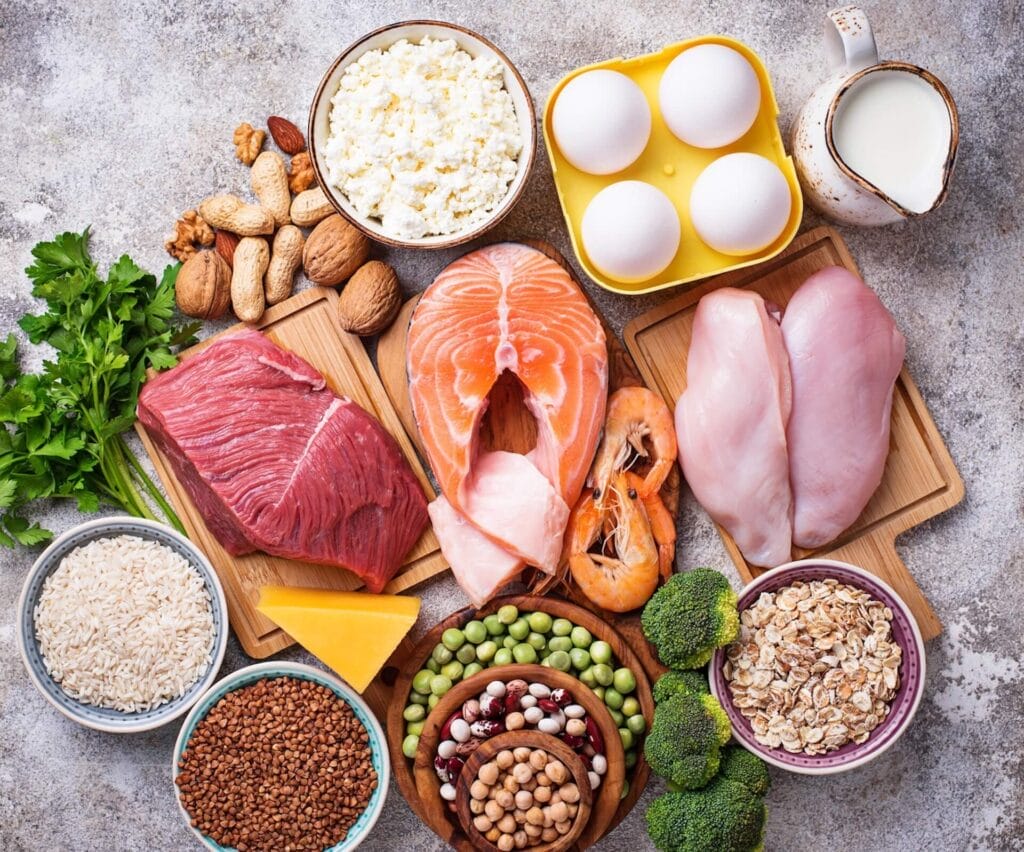
Calcium, vitamin D and protein all play a key role in keeping muscles and bones strong. Calcium builds and maintains bone density, while vitamin D helps the body absorb that calcium and supports muscle function. Protein then provides the structural foundation for your muscles, giving you the strength and stability needed to keep your balance.
Protein needs increase quite significantly after the age of 65, by as much as 50% compared to younger adults. Most older people need somewhere between 1 and 1.2 grams of protein per kilogram of body weight each day, which works out at roughly 70 to 90g for most residents. When someone isn’t getting enough, their muscles gradually weaken, making it that much easier to lose their footing. And it isn’t just the risk of falling that increases. Residents who are low in protein and calcium also face a much greater risk of fracture if they do fall. Hip fractures alone cost the NHS around £2 billion a year, and roughly 20% of those who suffer one end up moving into long-term care within twelve months.
Appetite naturally declines with age, and portions shrink as a result, too. So, care homes and other senior environments need stringent food standards in place to help residents get enough nutrition. Most senior catering teams already understand why these nutrients matter. But the difficulty lies in packing enough of them into smaller, more manageable portions that residents actually want to eat. That’s where strategic menu planning and nutritional awareness come into play.
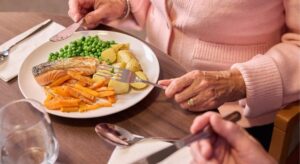
At White Oaks, this thinking led us to reconsider where our protein and calcium come from. Venison is a good example of a recent change we’ve made. Offering around 22g of protein per 100g, venison is naturally lean, rich in iron and B vitamins and considerably lower in saturated fat than equivalent cuts of beef. Crucially, it isn’t an unfamiliar ingredient to residents. It works easily into the dishes they already love: stews, pies, mince-based meals and lasagne, to name a few. So, rather than introducing something new, we’re simply upping the nutritional value of meals residents already look forward to. The feedback so far has been excellent.
The same goes for calcium. Rice pudding and cheesecake feature regularly on the dessert menu, and cheese and biscuits are always on offer too. It doesn’t need to be complicated! Even something as simple as a fortified milkshake with skimmed milk powder can increase protein and calcium intake while keeping fluids topped up.
The hidden risks of dehydration
Hydration is just as important as nutrition, but it’s even easier to overlook, and it’s one of the biggest contributors to falls in older adults.
Along with a reduced appetite, the body’s thirst mechanism also becomes less sensitive with age, meaning residents may be clinically dehydrated without feeling thirsty at all. For those over 65, the target is to drink around three to three and a half pints of fluids a day, but if thirst has declined and drinks are repetitive or uninspiring, intake can quickly drop well below what the body needs to stay safe.
One of the tricky things about dehydration in older adults is that the symptoms aren’t always obvious. It can show up as confusion, dizziness or fatigue, all of which make a fall far more likely. It’s also a common cause for urinary tract infections in older adults, which tend not to present with the usual symptoms and instead cause sudden disorientation or unsteadiness. In some cases, a fall that leads to a hospital admission can be traced back to something as simple as not drinking enough.
For senior catering and care teams, the response must be proactive rather than reactive. Having structured drink rounds and mixing up the menu from time to time can make a huge difference. It’s also worth remembering that fluids don’t have to mean water either. Soup, fruit, tea, coffee and smoothies all count too. After all, variety is the spice of life!
Matching the menu to the setting
Different senior living settings come with different needs, priorities and goals. In care homes, for instance, the focus is often restorative, so meals are usually calorie-dense and served in smaller portions more often. Drinks are offered regularly throughout the day too, so residents don’t have to be the ones remembering to ask.
Independent living environments call for a different approach that focuses on prevention and sustaining long-term health. The goal here shifts to balanced nutrition, while still giving residents the freedom to choose what and when they eat.
Regardless of the senior living setting, catering comes down to enjoyment. If food and drink don’t taste good, people simply will not consume them. Even the most carefully designed menu is ineffective if the meals are left untouched, which is why creativity and versatility are key.
The cost of fragility
Every year, ambulance crews are called out to around 700,000 falls involving older people, and more than 220,000 over-65s end up needing emergency care because of one. Fragility fractures cost the NHS an estimated £4.4 billion a year, and a large proportion of that could have been avoided altogether.
When considering fall prevention, nutrition and hydration must be part of the bigger picture. Great food and drink are at the heart of great care, offering far more than nourishment and hydration alone. They bring comfort, joy and a sense of community to residents every day. It’s this kind of care that helps older adults live happier and healthier lives.

Recent Articles
10/08/2026

 Site by