29/01/2026
IDDSI meals (International Dysphagia Diet Standardisation Initiative) are specially prepared, texture-modified foods for people with chewing or swallowing difficulties (dysphagia). Strictly categorised across levels 3 to 7, they are designed to be safer to swallow without compromising on nutrition or flavour. In this blog, our Head of Culinary and Dietitian share how we ensure no resident ever misses out on the joy of delicious food.
Mealtimes should be one of the best parts of the day. But when someone is living with dysphagia, eating and drinking can be a source of anxiety and stress. At White Oaks, our focus is on helping residents eat comfortably and with dignity. By following IDDSI standards, we safeguard our residents’ health and support their quality of life with meals that are both familiar and enjoyable.
To shine a light on how we support safer, more confident dining, we recently spoke to two of our experts: Darren Neal, Head of Culinary, and Valentina Giannelli, White Oaks Dietitian, who shared the processes our teams follow to ensure IDDSI meals are prepared and served to the highest standard.
How do you support safe dining at White Oaks?
One of our key priorities at White Oaks is to make sure residents feel included and not singled out. That means following IDDSI guidance closely while still serving meals that are both familiar and satisfying.
When producing and serving IDDSI meals, our teams focus on five key steps:
- We check that every element of the meal meets the required IDDSI If it doesn’t pass, we correct it or start again.
- We keep the IDDSI meal recognisable. We don’t mix everything together, and we avoid anything that could feel like an unexpected surprise on the plate.
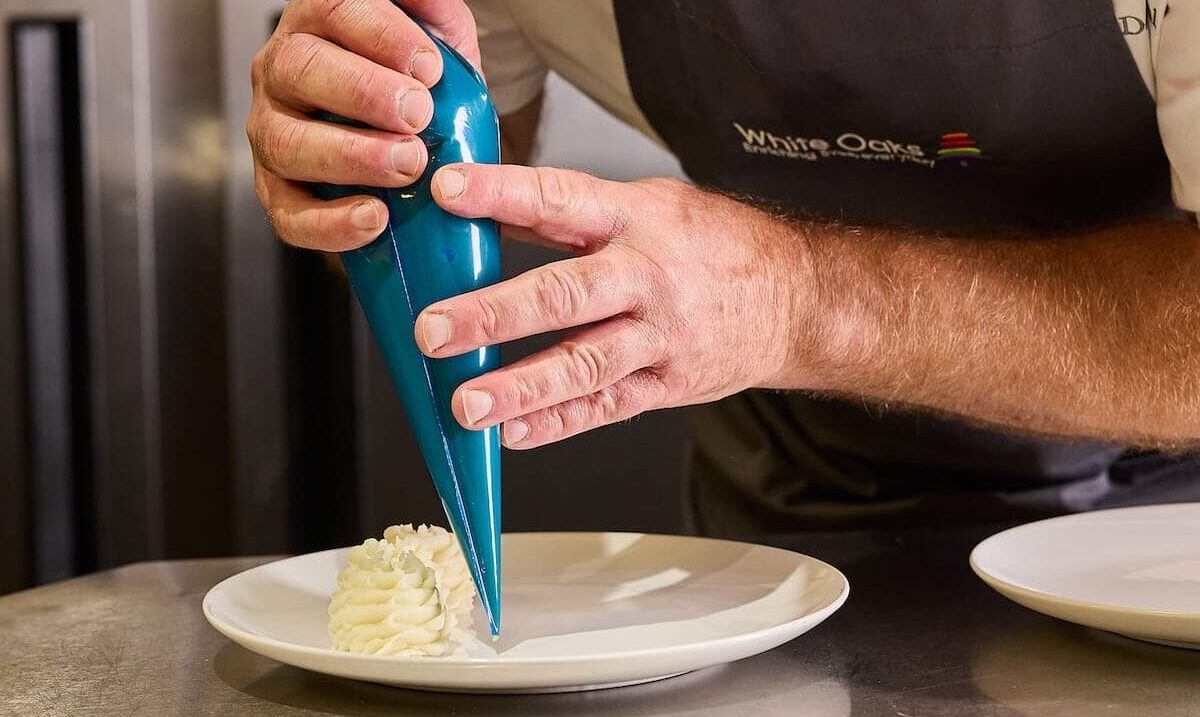
- We pipe at the point of service to prevent texture changes.
- We avoid pouring loose liquids over modified food.
- We follow each resident’s prescribed IDDSI level every time because the wrong level can increase risk.
What signs or symptoms typically lead to recommending IDDSI meals for a resident?
We usually start thinking about IDDSI meals when a resident shows possible signs of dysphagia. That might include coughing or choking when eating or drinking, difficulty chewing, meals taking a long time to finish, fatigue while eating, changes in voice, watering eyes or the sensation of food sticking. We also keep an eye out for more indirect signs, like avoiding tougher foods (often meat), reduced intake, recurrent chest infections and signs of malnutrition or dehydration.
How do you determine which IDDSI level is right for a resident?
We don’t guess – we work as a team around the resident. If someone is showing signs of swallowing difficulties, they should be assessed by a Speech and Language Therapist (SALT), who evaluates swallowing and recommends the most appropriate IDDSI food and fluid level. From there, we work closely with the dietetic teams to make sure meals aren’t just compliant, but nutritious, varied and enjoyable, while still meeting the prescribed level.
Creating nutritious, appealing IDDSI meals
Texture-modified meals should still feel like real meals. Our goal is always to make plates appetising, familiar and consistent, not different. We do that by preparing IDDSI meals fresh and from scratch, planned into each service time so teams have the time and space to use the right techniques. We also:
- Serve at the point of service
- Pipe foods so they resemble the shapes and portions residents expect
- Focus on maintaining the natural look of each element on the plate
Helping residents dine with confidence
For us, IDDSI is about more than consistency. It’s about protecting wellbeing while preserving choice, enjoyment and dignity. To keep standards high throughout the year, we run regular on-site training sessions, so teams stay confident in preparing and checking every meal served. We also have an online group for teams across all homes producing IDDSI meals, where staff can share photos, best-practice tips and get advice quickly when needed. Because teams can change and residents’ needs vary, we have a dedicated train-the-trainer team to support urgent sessions, refresher training and new starters as they join the business.
Talk to us about IDDSI meal support
We’d like to say a big thank you to Darren and Valentina for taking the time to chat with us and share their expertise.
The White Oaks team are proud to support residents with high-quality IDDSI meals designed to meet their needs, without taking away the comfort and pleasure of eating. If you’d like to learn more about how we can support your senior living setting, we’d love to hear from you.

Recent Articles


10/08/2026


 Site by